
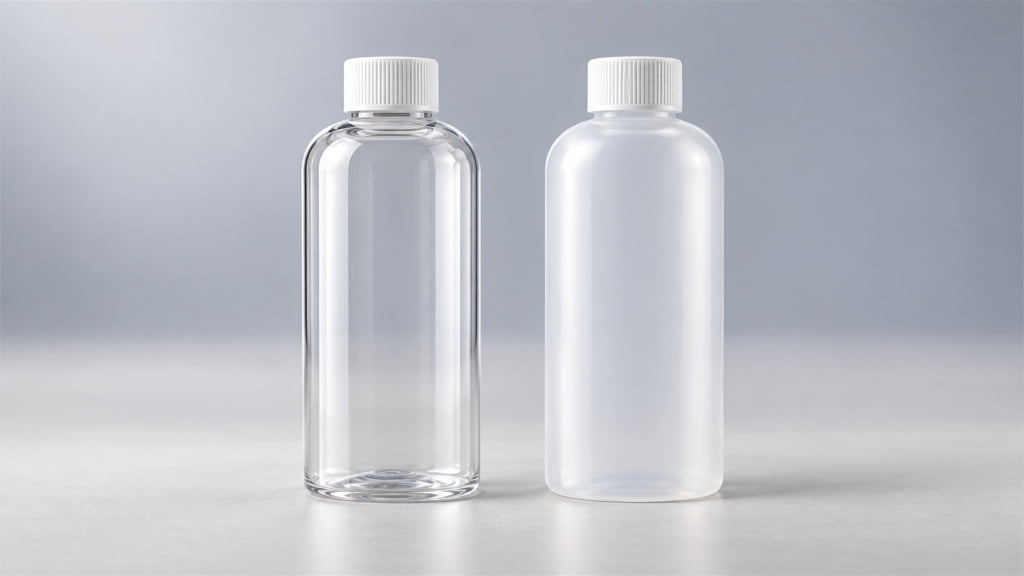
For cosmetic bottles, clear PET is a useful starting point when customers need to see the product. A natural translucent HDPE bottle is an option when a partly visible appearance is acceptable. For squeeze bottles, choose the bottle shape and dispensing closure together, then check how they work with your formula.
A practical PET vs HDPE comparison should help you decide three things: how the bottle should look, how users will dispense the product, and which bottle-and-closure combination to request for sampling.
PET vs HDPE Bottles at a Glance
What PET and HDPE Mean in Bottle Packaging
PET stands for polyethylene terephthalate, a plastic in the polyester family. The PET Resin Association identifies clarity as one of its characteristics. Clear PET bottles are worth considering when showing the contents is part of your packaging design.
HDPE stands for high-density polyethylene. Natural HDPE bottles can have a translucent appearance, allowing some visibility without the clear view offered by clear PET. Review a filled sample to judge how your product looks inside.
Compare the Requirements, Not Just the Resin Names
Use appearance to narrow your options, then compare the actual bottle designs. For either material, check the bottle with its intended closure—the cap or other component that closes the bottle—and the formula it will contain.
| Decision factor | How to narrow your options | What to check on samples or quotations |
|---|---|---|
| Product visibility | Consider clear PET for a clear view of the contents, or translucent HDPE when partial visibility is acceptable. | Review a filled sample with the intended color and decoration. |
| Squeeze dispensing | Ask for bottle designs intended for squeezing, with a suitable dispensing cap. | Check squeeze effort, product flow and how well the bottle returns to its shape after release. |
| Bottle shape and feel | Compare dimensions, bottle weight and grip alongside the material. | Handle filled samples and note any design differences that affect your preference. |
| Formula and closure | Evaluate the formula with the bottle, seal and all parts that contact the product. | Check compatibility and the neck finish—the bottle neck dimensions and thread specifications used to match a closure. |
| Decoration | Confirm which decoration options are available for each bottle. | Check color, artwork placement and finish on a decorated sample. |
| Quotation | Request prices for the same capacity, components, decoration and quantity. | Confirm whether each price covers an existing design or requires new molds and development work. |
If you need to keep an existing cap or pump, include it in the comparison from the start. A bottle that meets your appearance requirements still needs to fit the selected components.
Explore the available cosmetic packaging material options once you have identified which requirements are essential and which are flexible.
Choose a Bottle Based on How the Product Will Be Dispensed
Squeeze Bottles and Flip-Top Closures
Describe how customers will use the bottle. Will they turn it upside down and squeeze the product through a flip-top opening? Should they be able to control a small amount with one hand?
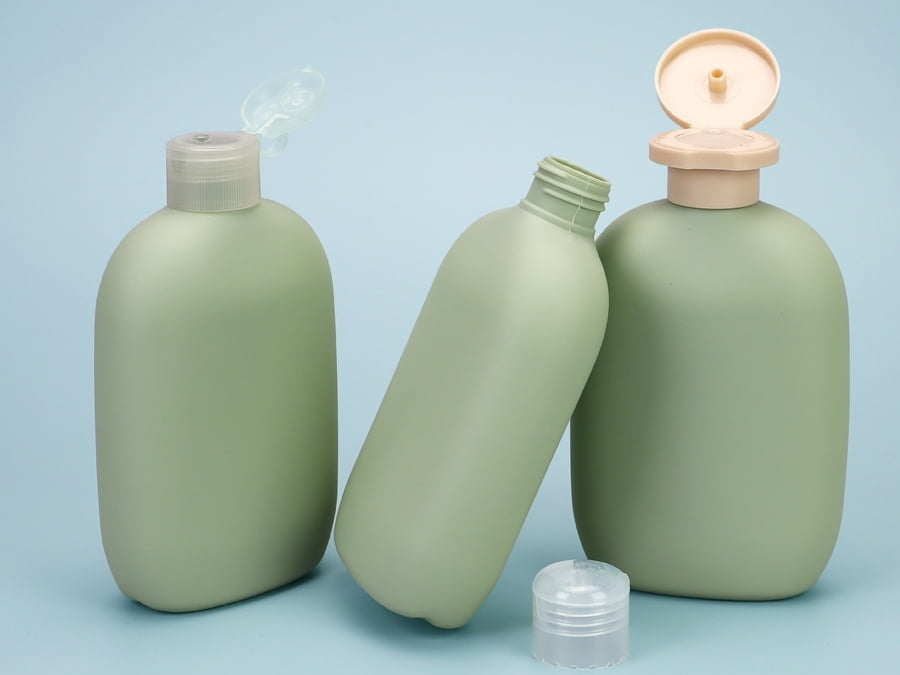
Fill the proposed bottle with the intended formula and try it with the selected cap. Check how much effort squeezing requires, how the product flows through the opening and whether the bottle returns to its shape after release.
A request such as “easy to squeeze with a flip-top cap” gives the supplier a clear handling requirement. Include a reference bottle if you have one, so the supplier can understand the feel you want.
A Squeeze Requirement That Changed the Packaging Choice
In one Fomalhaut packaging project, the initial direction was a PET bottle. When the customer clarified that the bottle needed to be squeezed, the proposed package changed to an HDPE bottle with a flip-top closure.
The takeaway is to define the dispensing requirement before choosing the bottle and cap. For your own project, check the proposed combination with the intended formula before approval.
Pumping, Pouring and Bottle Handling
For a pump bottle, check the grip, whether the bottle stays stable when the pump is pressed, and whether the pump fits securely. For a bottle used for pouring, check how easily users can control the flow when the bottle is full and nearly empty.
State the dispensing method in your sample request. If you already have a pump or cap, send its specifications or a physical sample so the supplier can check compatible bottle options.
Match the Bottle Appearance and Decoration Requirements
Product Visibility, Color and the Intended Look
Decide whether the contents should be clearly visible, partly visible or concealed. Compare samples that represent your intended finished appearance, rather than judging the bottle material from an undecorated reference alone.
For a colored bottle, provide a physical reference or agreed color target and specify which parts must match. Assess the bottle beside its cap or pump, with the intended artwork, rather than approving each part from separate screen images.
If the formula needs protection from light, make that a separate technical requirement. A white, dark or opaque appearance does not establish a particular UV-protection level.
Approve the Decorated Sample, Not Only a Reference Image
Use reference images to explain the look you want. Before production approval, request a representative decorated sample and confirm which decoration options are available for the selected bottle.
Review artwork position, legibility, color matching and finish. At Fomalhaut, sampling inspections include print-adhesion testing using 3M tape, with the test plan set according to product and project requirements. This checks how well the print adheres to the bottle, separately from how it looks.
Agree who will review appearance, formula compatibility and dispensing performance. Approving a color or printed design should not be mistaken for approving the complete bottle-and-closure combination.
Check Formula Compatibility with the Complete Bottle-Closure System
Confirm the Actual Formula and Use Conditions
Evaluate compatibility using the intended formula and the conditions in which the product will be filled, stored and used.
The European Commission’s guidance on cosmetic product safety reports identifies packaging–formula interactions, barrier properties and substance migration as factors that can affect product safety. This supports evaluating the intended formula with its proposed packaging; it does not establish that a particular PET or HDPE bottle is suitable.
Involve your formula developer, filling company and packaging supplier as needed. Share the relevant filling, storage and use conditions, and identify all components that will contact the formula. Agree on a confidential way to share sensitive formulation details.
Ask the technical team responsible for compatibility to define the checks needed for the actual formula and packaging. A product name or pH value alone is not enough to approve a bottle.
Check the Neck, Closure, Seal and Dispensing Components
A matching nominal neck diameter is not enough to confirm that a cap fits correctly. ASTM D2911/D2911M addresses screw-thread geometry and neck-finish measurements for plastic bottles. Check the complete bottle and closure specifications, then assess fit and sealing on assembled samples.
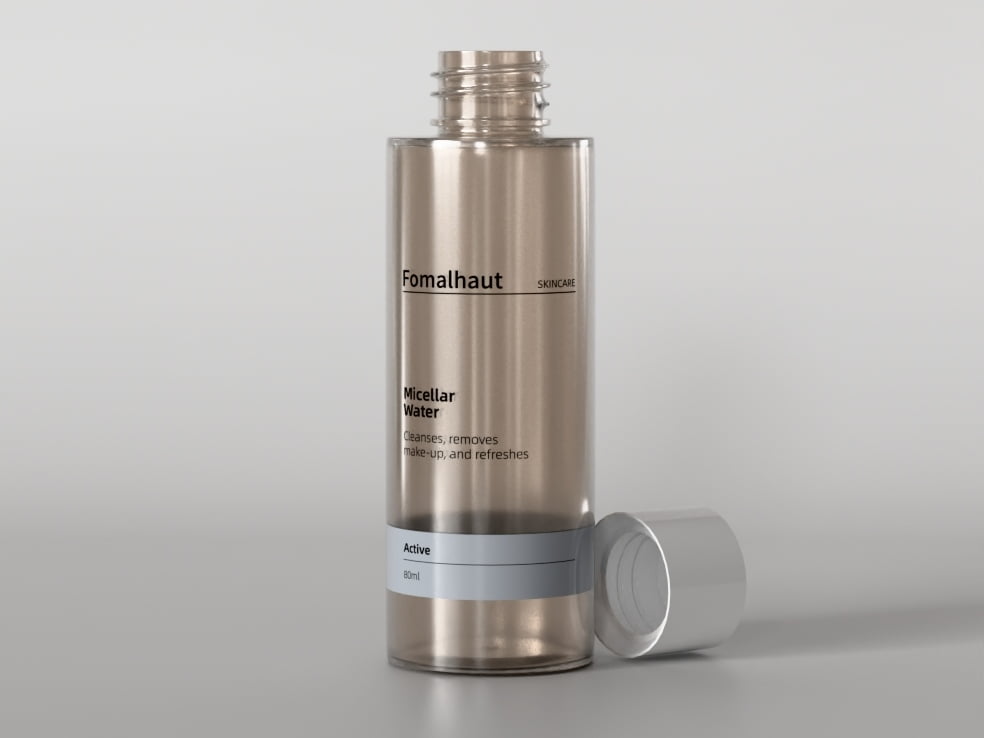
If a cap or pump has already been selected, provide its drawing or a physical sample. Have the supplier check the neck finish, seal and dispensing components, then assess the assembled bottle.
For a pump bottle, include the dip tube—the tube extending into the bottle—and other parts that contact the formula.
Review cosmetic bottle caps and closures alongside your bottle options. When switching from PET to HDPE or the reverse, recheck the fit even if the replacement bottle looks similar.
How Fomalhaut Checks Bottle Samples
At Fomalhaut, sampling inspections cover more than appearance. Depending on the product and project requirements, checks can include dimensions, capacity, sealing, drop tests and formula compatibility.
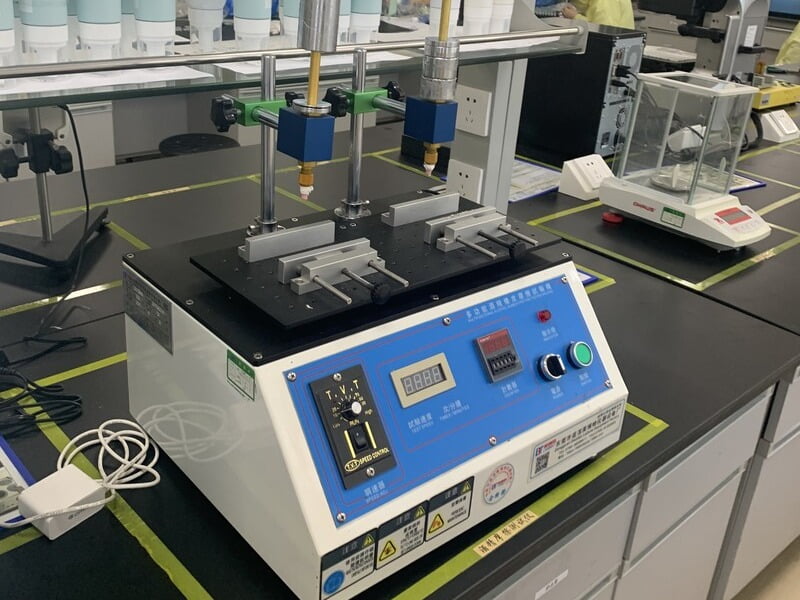
Dispensing-output checks assess the amount of product dispensed. Where applicable, cap pull-off checks assess the force needed to pull the cap off. Appearance and printing inspections are separate from these functional checks.
Ask which checks apply to the PET or HDPE bottle you are considering. Before approving samples, agree who will evaluate compatibility and performance, and what the samples must meet.
Compare Like-for-Like Packaging Quotes
Compare complete packaging specifications, not an undecorated PET bottle against a decorated HDPE bottle with a different cap. Give suppliers the same capacity, bottle dimensions or design reference, cap or pump requirements, color, decoration, order quantity and packing requirements.
Keep quotations for existing designs separate from proposals that require new molds. Ask what each price includes and which specifications still need confirmation. If a supplier proposes an alternative, request the specification differences alongside the price.
To answer “Is PET or HDPE cheaper?” for your project, compare quotations for equivalent requirements. Check whether a lower price includes the same components, decoration and development work.
What to Confirm Before Requesting Bottle Samples
Send the supplier these six groups of information:
-
Product and use conditions. Describe the product and its relevant filling, storage and use conditions. Agree how to share any confidential formula information with the team checking compatibility.
-
Capacity, shape and dispensing method. Specify the target fill volume, preferred dimensions and whether users will squeeze, pump or pour. Include a reference bottle if you have one.
-
Neck, closure and product-contact parts. Identify any components you must keep and where you are open to suggestions. Send drawings or samples for existing caps, pumps and other components.
-
Visibility, color and decoration. Explain the required appearance and provide artwork or references. Specify whether you need an undecorated bottle for initial selection or a decorated sample for appearance approval.
-
Order quantity and existing or new molds. Provide the intended quantity and say whether you prefer an existing bottle design or custom development. Ask the supplier to identify the components and development work included in the quotation.
-
Sample review and approval. Identify who will supply the formula, review appearance and evaluate the assembled bottle. Agree which checks and results are needed before production approval.
If recyclability or recycled content is a project requirement, include the target market and the documentation your team needs. Assess these requirements for the proposed packaging, including its components, rather than the bottle material alone.
Frequently Asked Questions
Is PET better than HDPE for cosmetic bottles?
PET is a useful starting point when a clear view of the contents matters. A translucent HDPE bottle is another option when partial visibility is acceptable. For squeeze, pump or pour applications, compare the actual bottle designs and confirm closure fit and formula compatibility before ordering.
Is PET stronger than HDPE?
There is no single answer without defining the type of strength you need. Drop resistance, stacking loads and repeated squeezing are different requirements. Ask for relevant test results for the proposed bottle design and intended conditions.
What limitations should buyers consider with PET and HDPE bottles?
A natural translucent HDPE bottle will not provide the same clear view as a clear PET bottle. For clear PET, product visibility does not establish suitability for a light-sensitive formula. With either material, check the actual bottle's dispensing performance, closure fit and formula compatibility.
Can I use the same cap when switching from PET to HDPE?
Possibly, but the complete neck finish and seal must match, not just the nominal diameter. Provide the existing cap drawing or sample and assess it with the proposed replacement bottle before approval.
What should I send a supplier before requesting samples?
Send the product type, target capacity, preferred shape, dispensing method, cap or pump requirements, appearance references and intended quantity. Include any components you must keep and identify who will review formula compatibility. Use the six-point checklist above to prepare your request.
Fomalhaut supplies PET and HDPE packaging options, with specific designs, components and sample availability subject to project confirmation. Share your requirements to discuss bottle and closure options for your product.
Discuss Your Bottle Requirements
<!--[googlesitekit-end-of-content]-->